
Why Your Eyes Water When They Are Actually Dry

It sounds confusing: your eyes feel watery, tears are running down your face, and yet your eye doctor says you have dry eye.
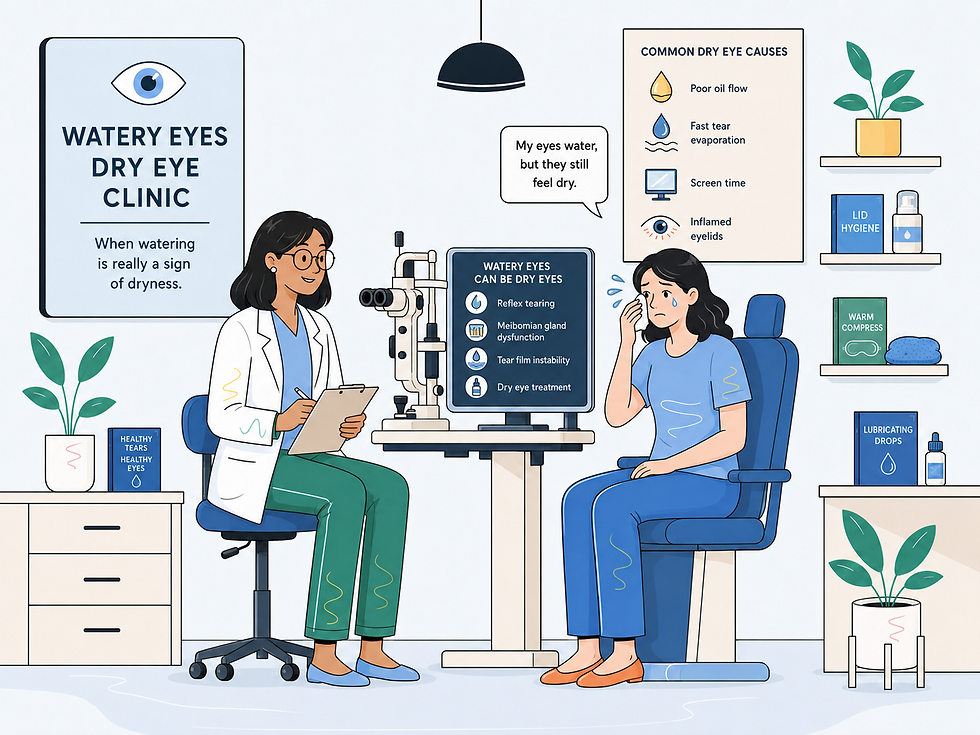
But watery eyes are actually one of the most common symptoms of dry eye disease. The problem is not always that your eyes are making “too many tears.” Often, the issue is that your tears are not staying on the eye long enough or the tear film is unstable. When the surface of the eye becomes irritated, your body responds by making extra reflex tears.
These emergency tears can make your eyes water, but they do not always fix the underlying dryness.
How Can Dry Eyes Cause Watery Eyes?
Your eyes need a healthy tear film to stay comfortable and clear. The tear film is a thin layer of moisture that coats the front surface of the eye every time you blink.
When the tear film breaks down too quickly, the surface of the eye becomes exposed. This can cause burning, stinging, redness, fluctuating vision, and irritation. In response, the eye sends a signal to produce more tears.
These are called reflex tears.
Reflex tears are your body’s quick reaction to irritation. They are similar to the tears you make when cutting onions or being outside on a windy day. They can flood the eye, but they are often watery and temporary. They do not always have the right balance of oil, water, and mucus needed to protect the surface of the eye.
That is why your eyes can feel dry and irritated even while they are tearing.
The Tear Film Has Three Important Layers
A healthy tear film has three main parts:
1. The Oil Layer
The oil layer comes from the meibomian glands, which are tiny glands located along the eyelid margins. This oil helps slow down evaporation and keeps tears from drying out too quickly.
2. The Water Layer
This layer provides moisture and helps wash away debris from the surface of the eye.
3. The Mucus Layer
The mucus layer helps tears spread evenly across the front of the eye.
When any part of this system is not working properly, the tear film can become unstable. One of the most common reasons is a problem with the oil layer.
Meibomian Gland Dysfunction: A Common Cause of Watery Dry Eyes
One of the biggest causes of dry eye is meibomian gland dysfunction, often called MGD.
The meibomian glands normally release a thin, healthy oil into the tears. This oil helps keep the watery part of your tears from evaporating too fast. When these glands become clogged, thickened, inflamed, or do not release enough oil, the tears evaporate more quickly.
This is called evaporative dry eye.
When tears evaporate too fast, the eye surface becomes irritated. The brain then tells the lacrimal gland to make more watery tears. That can lead to the frustrating cycle of:
Dryness → irritation → reflex tearing → watery eyes → more irritation
Patients with meibomian gland dysfunction may notice:
Watery eyes
Burning or stinging
Blurry vision that comes and goes
Red or tired eyes
Heavy eyelids
Crusting around the lashes
Sensitivity to wind, fans, or air conditioning
Contact lens discomfort
Symptoms that worsen with screen use
Why Reflex Tears Do Not Solve the Problem
Reflex tears are mostly watery. They help rinse the eye, but they may not contain enough oil to stay on the eye surface.
Think of it like splashing water on dry skin. It may feel wet for a moment, but if the skin barrier is damaged, the water evaporates quickly and the dryness returns.
The same thing can happen with the eyes. Without a healthy oil layer, the watery tears do not stay in place. They may spill over the eyelids instead of coating the eye properly.
This is why many patients say:
“My eyes are watering all day, but they still feel dry.”
That is a classic dry eye complaint.
Tear Film Instability and Blurry Vision
Dry eye does not only cause discomfort. It can also affect vision.
The tear film is the first surface that light passes through when entering the eye. If the tear film is uneven or breaks apart too quickly, vision can become blurry, hazy, or inconsistent.
Many patients describe this as vision that clears after blinking but becomes blurry again a few seconds later.
This is often a sign that the tear film is unstable.
Common Triggers That Make Watery Dry Eyes Worse
Watery dry eyes may worsen with:
Computer and phone use
Reading for long periods
Driving
Wind exposure
Ceiling fans
Air conditioning
Dry indoor air
Allergies
Contact lens wear
Makeup or eyelid inflammation
Certain medications
Hormonal changes
Aging
Screen use is especially common because people blink less often when focusing. Less blinking means less oil is released from the meibomian glands, which can make tears evaporate faster.
How Eye Doctors Diagnose the Cause
A dry eye evaluation looks at more than just whether the eyes are wet or dry. Your eye doctor may check:
Tear film quality
Tear breakup time
Eyelid health
Meibomian gland function
Inflammation
Corneal staining
Conjunctival staining
Blink quality
Tear volume
Contact lens-related dryness
Signs of allergy or blepharitis
This helps determine whether the watering is caused by dry eye, allergies, blocked tear ducts, eyelid problems, or another condition.
Treatment for Watery Eyes Caused by Dry Eye
The best treatment depends on the cause. For many patients, treatment focuses on improving the tear film and reducing inflammation.
Artificial Tears
Artificial tears can help support the tear film and reduce irritation. For evaporative dry eye or meibomian gland dysfunction, lipid-based artificial tears may be especially helpful because they support the oil layer of the tear film.
Preservative-free drops are often preferred for patients who use tears frequently.
Warm Compresses
Warm compresses can help soften thickened oil in the meibomian glands. This may improve oil flow and reduce tear evaporation.
Consistency matters. A quick splash of warm water is usually not enough. A heated eye mask used for several minutes is often more effective.
Lid Hygiene
Cleaning the eyelid margins can help reduce buildup, bacteria, inflammation, and irritation around the lashes. This may be especially important for patients with blepharitis or meibomian gland dysfunction.
Blink Training
Incomplete blinking is common, especially during screen use. Making a habit of full, intentional blinking can help spread tears evenly and release oil from the meibomian glands.
A simple reminder is the 20-20-20 rule: every 20 minutes, look 20 feet away for 20 seconds and blink fully several times.
Prescription Dry Eye Drops
Some patients need prescription drops to reduce inflammation and improve tear film function. These may be recommended when over-the-counter drops are not enough or when dry eye is more chronic.
In-Office Dry Eye Treatments
Depending on the severity and type of dry eye, your doctor may recommend in-office treatments to improve meibomian gland function, reduce inflammation, or stabilize the tear film.
These treatments may be helpful when the glands are clogged or when symptoms keep returning despite home care.
When Watery Eyes May Not Be Dry Eye
Although dry eye is a common reason for watering, it is not the only cause. Watery eyes can also be caused by:
Allergies
Eyelid inflammation
Blocked tear ducts
Eyelid position problems
Eye infections
Corneal scratches
Foreign bodies
Contact lens irritation
Environmental exposure
If one eye is constantly watering, if there is pain, discharge, sudden redness, light sensitivity, or vision loss, it is important to have an eye exam.
The Bottom Line
Watery eyes can absolutely be a sign of dry eye.
When the tear film is unstable, the surface of the eye becomes irritated. Your body responds by making reflex tears, but those tears are often too watery to properly protect the eye. If the oil layer is poor because of meibomian gland dysfunction, the tears may evaporate quickly or spill out of the eye instead of staying where they are needed.
The goal of treatment is not simply to “dry up” the tears. The goal is to improve the quality and stability of the tear film so your eyes feel more comfortable, your vision is clearer, and the watering cycle improves.
If your eyes are constantly watering, burning, or fluctuating in vision, a dry eye evaluation can help identify the cause and guide the right treatment plan.


Comments