
Upneeq Eye Drops: A Non-Surgical Option for Droopy Eyelids

What Is Upneeq?
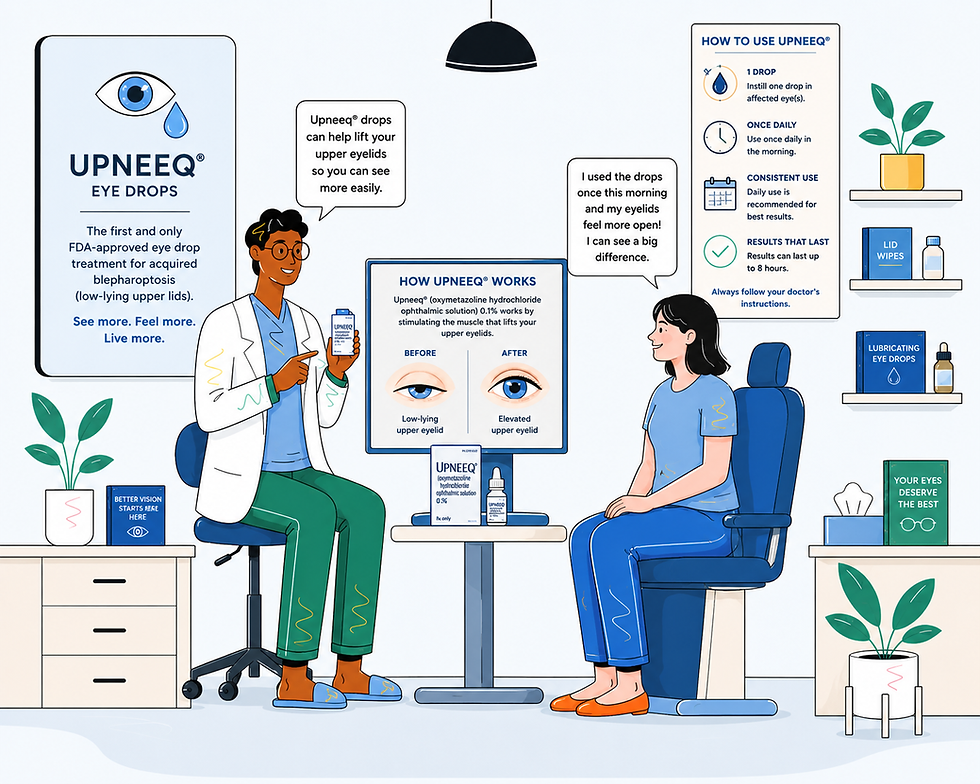
Upneeq is a prescription eye drop used to treat acquired blepharoptosis, also called acquired ptosis, in adults. Ptosis means the upper eyelid sits lower than normal. For some patients, this can make the eyes look tired or smaller. For others, the eyelid may partially block vision, especially the upper field of vision. Upneeq contains oxymetazoline hydrochloride ophthalmic solution 0.1% and is FDA-approved for acquired blepharoptosis in adults.
Unlike eyelid surgery, Upneeq does not permanently change the eyelid position. It is a temporary, prescription drop that may lift the upper eyelid for part of the day.
How Does Upneeq Work?
Upneeq works by stimulating a small eyelid muscle called Müller’s muscle, which helps elevate the upper lid. When the medication takes effect, the upper eyelid may lift slightly, making the eye appear more open.
According to Upneeq’s patient-facing information, the drop may start working in as little as 5 minutes and may last up to 8 hours for some patients.
Who Might Benefit From Upneeq?
Upneeq may be considered for adults who have low-lying upper eyelids that developed over time. This can happen with aging, eyelid muscle changes, contact lens wear, prior eye surgery, or other causes.
Patients may ask about Upneeq because they notice:
One or both upper eyelids look droopy
Their eyes look tired or less open
The upper eyelid feels like it is affecting vision
They raise their eyebrows to see more clearly
Their eyelids appear uneven in photos
Upneeq may be a helpful option for some patients, but it is not right for every type of droopy eyelid.
Why an Eye Exam Matters First
A droopy eyelid should be evaluated before starting treatment. While many cases are mild or age-related, ptosis can sometimes be related to other eye or medical conditions. During an exam, your eye doctor can check eyelid position, pupil response, eye movements, vision, eye pressure, ocular surface health, and whether the eyelid is affecting your field of vision.
This is important because Upneeq treats the appearance and functional effect of certain low-lying lids, but it does not treat every underlying cause of ptosis.
How Is Upneeq Used?
Upneeq is typically used as one drop once daily in the affected eye or eyes, as directed by the prescribing doctor. The medication comes in single-use containers and is preservative-free. Contact lenses should be removed before using Upneeq and may generally be reinserted after waiting 15 minutes.
Patients should avoid touching the dropper tip to the eye, eyelid, fingers, or other surfaces to reduce the risk of contamination.
Is Upneeq a Replacement for Eyelid Surgery?
Not always. Upneeq can temporarily lift the eyelid, but the effect wears off. Eyelid surgery may still be recommended for patients with more significant ptosis, blocked vision, excess eyelid skin, or eyelid changes that cannot be adequately improved with drops.
For some patients, Upneeq may be a convenient non-surgical option. For others, it may be used to see whether lifting the eyelid improves comfort, appearance, or vision before considering additional treatment.
Possible Side Effects and Precautions
Like any medication, Upneeq can cause side effects. The FDA labeling lists possible eye-related side effects such as punctate keratitis, eye redness, dry eye, blurred vision, and eye discomfort or pain with instillation.
Because Upneeq is an alpha-adrenergic agonist, it should be used with caution in patients with certain cardiovascular conditions, since this class of medication may affect blood pressure. The FDA label also notes caution in patients with severe or unstable cardiovascular disease, orthostatic hypotension, and uncontrolled hypertension or hypotension.
Patients should tell their eye doctor about their medical history and current medications before using Upneeq.
When to Call Your Eye Doctor
Contact your eye doctor promptly if you have a sudden droopy eyelid, new double vision, unequal pupils, eye pain, headache, weakness, or other neurologic symptoms. A new or sudden change in eyelid position should not be treated as only cosmetic until it has been properly evaluated.
You should also call your eye doctor if you experience eye irritation, redness, blurry vision, or discomfort after using the drop.
Upneeq at OPT-ISM
At OPT-ISM, we evaluate eyelid position as part of a comprehensive eye exam. If you are bothered by droopy eyelids or feel like your eyelids are affecting your vision, we can check whether Upneeq may be appropriate for you and discuss other options if needed.
Low-lying eyelids can be more than a cosmetic concern. A careful eye exam helps determine whether the issue is mild, functional, cosmetic, or related to another eye health concern.

Comments