
Patient Friendly Guide to Double Vision: Causes, Symptoms, and When to Get Your Eyes Checked
- David B. Sabin

- May 20
- 5 min read
Updated: May 25
Double vision, also called diplopia, happens when you see two images of one object. The images may appear side-by-side, stacked, diagonal, tilted, or slightly shadowed. Sometimes double vision is mild and comes and goes. Other times, it can appear suddenly and make it difficult to read, drive, walk, or focus.
Because double vision can come from the eyes, eye muscles, nerves, or brain, it is important to take it seriously—especially if it is new, sudden, or worsening.
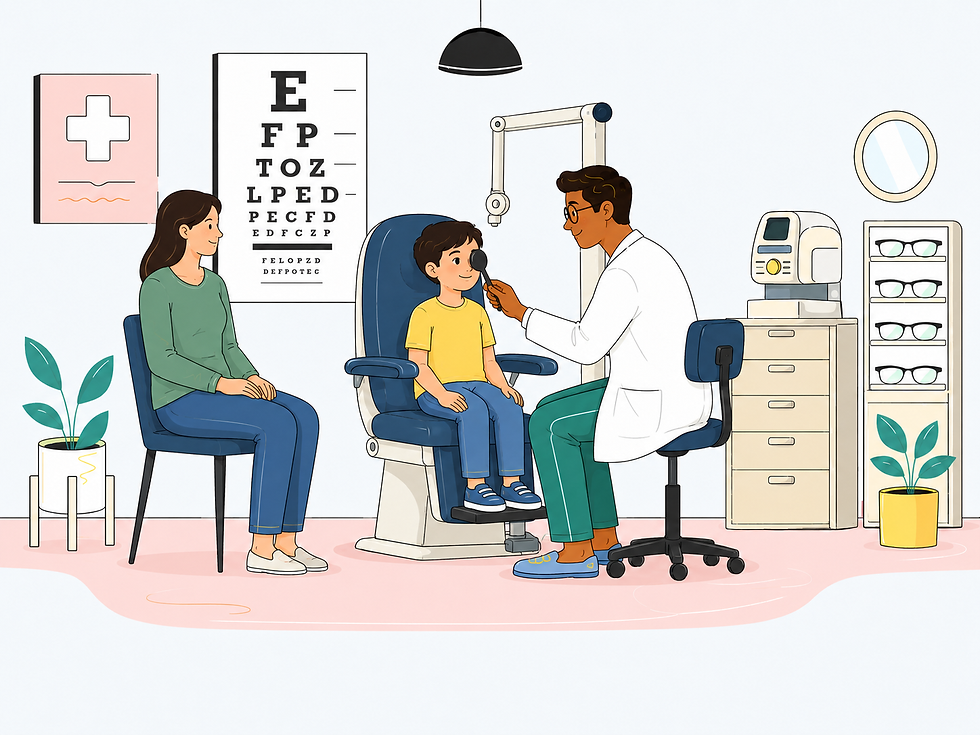
What Is Double Vision?
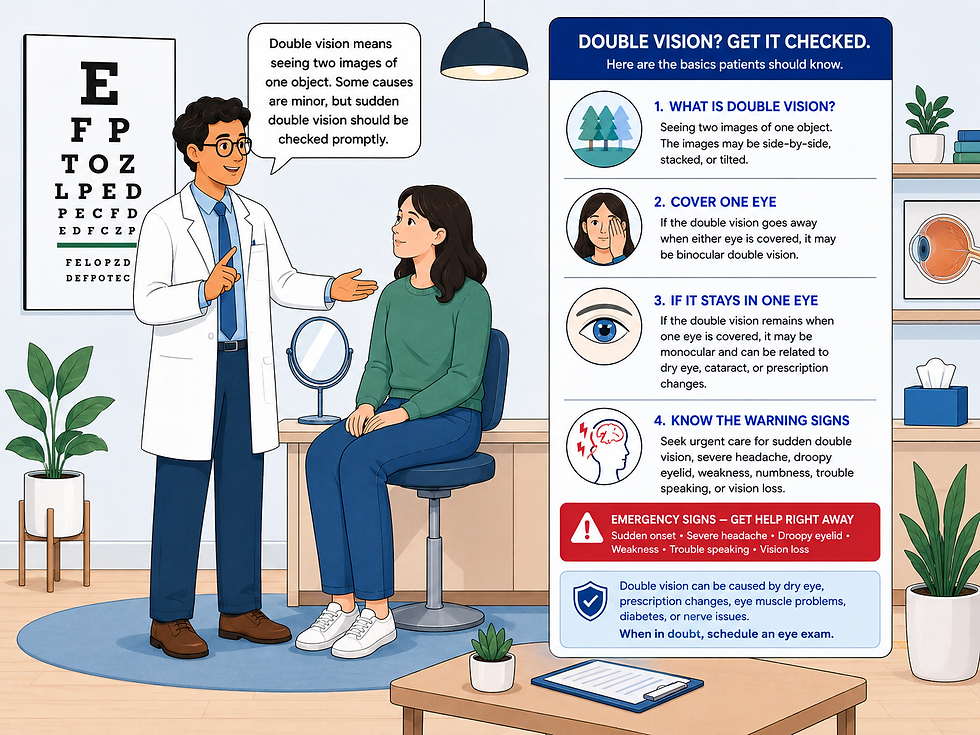
Double vision means the eyes and brain are not combining images properly. There are two main types: monocular double vision and binocular double vision.
Monocular Double Vision
Monocular double vision means the double vision remains even when one eye is covered. This type is often caused by an issue within one eye, such as:
Dry eye
Cataracts
Corneal irregularity
Astigmatism
Prescription changes
Problems with the tear film
This type may feel more like a shadow, ghost image, glare, or overlapping image.
Binocular Double Vision
Binocular double vision means the double vision goes away when either eye is covered. This usually means the two eyes are not lining up correctly.
Binocular double vision may be caused by:
Eye muscle imbalance
Strabismus
Nerve problems
Trauma
Thyroid eye disease
Diabetes or high blood pressure affecting eye movement nerves
Neurological conditions
This type of double vision should always be evaluated, especially if it starts suddenly.
Common Symptoms of Double Vision
Patients may notice:
Seeing two images of one object
Images side-by-side, stacked, diagonal, or tilted
Double vision that improves when one eye is covered
Eye strain or headaches
Trouble reading
Difficulty driving
Problems walking or going down stairs
Closing one eye to see clearly
Turning or tilting the head to reduce symptoms
The direction of the double vision can help the eye doctor determine which eye muscles or nerves may be involved.
Diabetes and Double Vision
Patients with diabetes can sometimes develop sudden double vision because of changes in the small blood vessels that supply the nerves controlling eye movement. This is called a microvascular cranial nerve palsy or diabetic ischemic nerve palsy.
This is different from diabetic retinopathy. Diabetic retinopathy affects the blood vessels in the retina, which is the light-sensitive tissue in the back of the eye. A diabetic nerve palsy affects one of the nerves that helps move the eyes.
When one of these nerves does not work properly, one eye may not move normally. The eyes may no longer point at the same target, causing double vision.
What Diabetic Double Vision May Feel Like
A diabetic patient may notice:
Sudden double vision
Double vision that goes away when either eye is covered
Trouble looking to the side, up, or down
One eye that feels like it is not tracking correctly
Eye strain or headache
Difficulty reading, driving, or walking
A head turn or head tilt to reduce the double vision
In many cases, diabetic ischemic nerve palsies can improve over weeks to months, but they still need to be checked. New double vision should not automatically be blamed on diabetes because other serious causes may need to be ruled out.
Other Causes of Double Vision
Double vision can happen for many reasons. Some are minor and treatable, while others require urgent attention.
Common causes include:
Dry Eye
Dry eye can cause fluctuating or ghost-like vision. Patients may notice that the double or shadowed image changes with blinking or improves temporarily with artificial tears.
Prescription Changes
Uncorrected nearsightedness, farsightedness, or astigmatism can sometimes cause blurry or shadowed vision. Updating glasses or contact lenses may help.
Cataracts
Cataracts can scatter light and create glare, halos, blur, or monocular double vision.
Eye Muscle Imbalance
Some patients have difficulty keeping the eyes aligned. This may become more noticeable with fatigue, reading, computer work, or aging.
Thyroid Eye Disease
Thyroid-related inflammation can affect the muscles around the eyes. This may cause pressure, bulging eyes, restricted eye movement, or double vision.
Stroke, Aneurysm, or Neurological Conditions
Sudden double vision can sometimes be a sign of a neurological problem. This is why new double vision, especially with other symptoms, should be taken seriously.
When Is Double Vision an Emergency?
Seek urgent medical care if double vision is sudden or occurs with:
Severe headache
New droopy eyelid
A new enlarged or unequal pupil
Weakness, numbness, facial droop, dizziness, or trouble speaking
New vision loss
Eye pain with swelling or redness
Recent head trauma
Trouble walking or loss of balance
Confusion or difficulty staying alert
These symptoms may suggest a more serious medical or neurological condition.
How an Eye Doctor Checks Double Vision
During an eye exam, your optometrist may check:
Vision and Prescription
The doctor will check how clearly you see and whether glasses or contact lens changes could be contributing to symptoms.
Eye Alignment
The doctor will evaluate whether the eyes are pointing in the same direction and working together properly.
Eye Movements
The doctor will check how well each eye moves in different directions.
Pupil Testing
Pupil testing can help detect signs of certain nerve or neurological problems.
Prism Testing
Prism may be used to measure the amount of eye misalignment and determine whether prism glasses could help.
Eye Health Evaluation
The doctor may examine the cornea, lens, retina, macula, and optic nerve to look for eye-related causes of double vision.
Depending on the findings, the doctor may recommend monitoring, glasses changes, prism, dry eye treatment, referral, imaging, or additional medical evaluation.
Treatment Options for Double Vision
Treatment depends on the cause. Options may include:
Updated Glasses or Contact Lenses
If the double vision is related to prescription changes, astigmatism, or lens issues, updated correction may help.
Dry Eye Treatment
If the issue is caused by an unstable tear film, artificial tears or other dry eye treatments may improve vision quality.
Prism Glasses
Prism can help shift images so the eyes can work together more comfortably. Some patients need temporary prism, while others may benefit from permanent prism in their glasses.
Temporary Patching or Fogging One Lens
If double vision is very bothersome, temporarily covering one eye or fogging one lens may help reduce symptoms while the cause is being evaluated or while the nerve recovers.
Medical Treatment or Referral
If double vision is related to diabetes, high blood pressure, thyroid disease, inflammation, trauma, or a neurological condition, treating the underlying cause is important. Some patients may need coordination with their primary care doctor, endocrinologist, neurologist, ophthalmologist, or neuro-ophthalmologist.
Why You Should Not Ignore Double Vision
Double vision is a symptom, not a diagnosis. The important question is why it is happening.
Some causes are simple, such as dry eye or a prescription change. Others may involve the eye muscles, nerves, blood vessels, or brain. If double vision is new, sudden, worsening, or associated with other symptoms, it should be evaluated promptly.
Schedule an Eye Exam for Double Vision in Tampa
At OPT-ISM, we evaluate vision symptoms such as double vision, blurry vision, eye strain, headaches, and changes in eye alignment. If your double vision is sudden or associated with neurological symptoms, seek emergency care right away. For ongoing or intermittent double vision, a comprehensive eye exam can help identify the cause and guide the next step.


Comments