
Kids’ Eye Exams: Signs Your Child May Need Glasses

Children rely on their vision every day—at school, while reading, using tablets, playing sports, and interacting with the world around them. But kids do not always realize their vision is blurry. To them, the way they see may feel “normal,” even when one or both eyes are working harder than they should.
That is why parents should watch for subtle signs that a child may need glasses or a comprehensive eye exam. The CDC recommends having a child’s vision checked if you notice signs such as squinting, eye rubbing, or headaches after schoolwork.
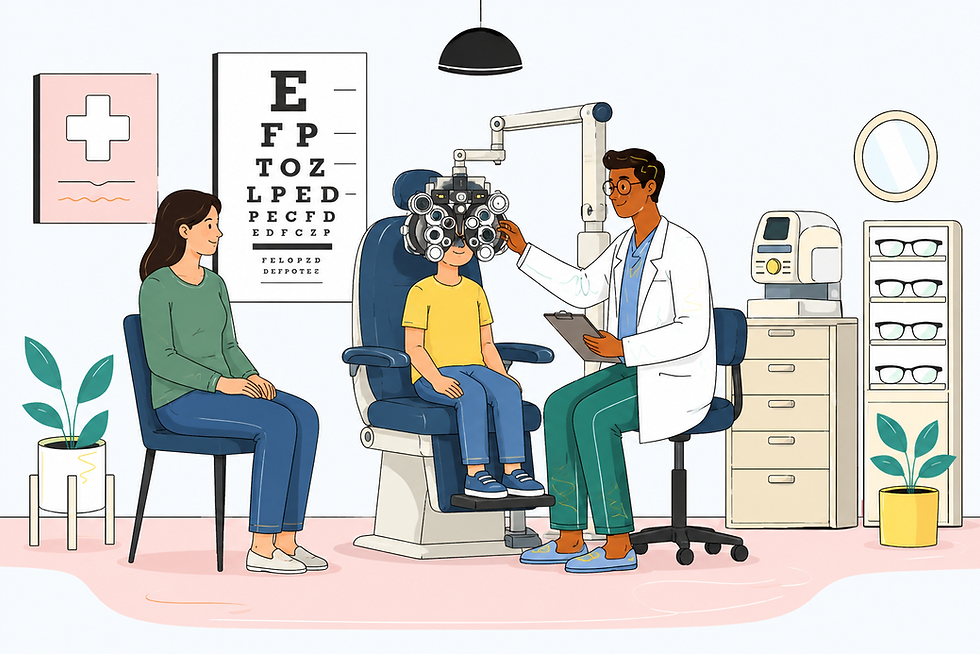
At OPTISM in Tampa, kids’ eye exams are designed to evaluate more than just whether a child can see letters on a chart. A comprehensive exam can check focusing, eye teaming, eye alignment, prescription needs, and overall eye health.
1. Squinting or Closing One Eye
Squinting is one of the most common signs that a child may be trying to sharpen blurry vision. A child may squint when looking at the board, watching TV, reading, or looking at something far away.
Squinting can be associated with common prescription needs such as:
Nearsightedness
Farsightedness
Astigmatism
Unequal prescriptions between the two eyes
Some children may also close one eye or tilt their head to see more clearly. The American Academy of Ophthalmology notes that head turning or unusual viewing behavior can sometimes be a sign of a refractive error or other vision issue.
2. Frequent Headaches
Headaches, especially after reading, homework, tablet use, or school, can be a sign that a child’s eyes are working too hard.
This does not always mean a child needs glasses, but it is a reason to schedule an eye exam. Eye strain can happen when a child has an uncorrected prescription, focusing difficulty, or trouble using both eyes together comfortably.
Parents may notice their child saying things like:
“My head hurts after school.”
“Reading makes me tired.”
“My eyes hurt.”
“I don’t want to do homework.”
A child may not connect the headache to their eyes, so patterns matter.
3. Reading Problems or Avoiding Close Work
Vision plays a major role in reading. A child who is struggling with near work may skip lines, lose their place, reread the same sentence, or avoid reading altogether.
Some signs to watch for include:
Holding books or tablets very close
Using a finger to follow every word
Losing their place while reading
Complaining that words move or blur
Avoiding homework or reading assignments
Short attention span with near tasks
Not every reading issue is caused by vision, but a child should have their eyes checked when reading feels uncomfortable, frustrating, or unusually tiring.
4. Eye Turns or Poor Eye Alignment
If one eye appears to turn in, out, up, or down—even occasionally—it should be evaluated. Eye turns can be more noticeable when a child is tired, daydreaming, focusing up close, or looking in the distance.
Eye alignment problems are important because they may affect depth perception, eye teaming, and visual development. The American Academy of Ophthalmology notes that amblyopia, sometimes called “lazy eye,” can occur when conditions such as refractive error or strabismus are not treated.
Parents may notice:
One eye drifting
The child covering one eye
Head tilting
Poor depth perception
Clumsiness or trouble with sports
Complaints of double vision
An eye turn does not always mean something serious, but it should not be ignored.
5. Changes in School Performance
Sometimes the first sign of a vision problem is not an eye complaint—it is a school problem.
A child may start falling behind, losing focus, avoiding assignments, or appearing uninterested in class. If they cannot clearly see the board, comfortably read, or sustain focus during near work, school may become more difficult.
Vision problems can sometimes look like attention issues, lack of motivation, or learning struggles. That is why an eye exam is an important step when a child’s school performance changes unexpectedly.
School Vision Screenings Are Helpful, But They Are Not the Same as an Eye Exam
School screenings can be useful, but they are not a replacement for a comprehensive eye exam. Screenings often focus mainly on distance vision, while a full eye exam can evaluate prescription, eye health, focusing ability, eye teaming, and eye alignment.
A child may pass a basic screening and still have trouble with reading, focusing, or eye coordination. If symptoms are present, it is worth scheduling a full pediatric eye exam even if a school screening was normal.
When Should You Schedule a Kids’ Eye Exam?
You should consider scheduling an eye exam if your child has:
Squinting
Frequent headaches
Blurry vision complaints
Reading difficulty
Eye rubbing
Eye turns
Closing or covering one eye
Trouble seeing the board
Declining school performance
Avoidance of homework or reading
A family history of strong prescriptions, lazy eye, or eye turns
Even if your child does not complain, routine eye exams are important because children may not know what clear vision is supposed to look like.
What Happens During a Kids’ Eye Exam?
A pediatric eye exam may include checking:
Distance and near vision
Eye focusing ability
Eye teaming and tracking
Eye alignment
Glasses prescription
Eye pressure when appropriate
Internal and external eye health
The goal is to determine whether your child needs glasses, whether both eyes are developing properly, and whether there are any signs that need closer monitoring.
Helping Kids See Clearly in Tampa
Clear vision can make a meaningful difference in a child’s comfort, confidence, reading, learning, and daily life. If your child is squinting, getting headaches, struggling with reading, showing an eye turn, or having trouble in school, an eye exam is a smart next step.
At OPTISM, we provide comprehensive eye exams for children and families in Tampa. If you are concerned about your child’s vision, schedule an appointment so we can evaluate their eyes and help determine whether glasses or additional care is needed.


Comments